 (888) 632-8764
These days, police forces’ employment of night vision goggles can be the difference between a successful and unsuccessful mission. These tools, which were hitherto only available for military operations, now assist police enforcement in taking control of the night. Police teams rely on night vision goggles to provide cops a crucial advantage in the dark during SWAT raids and search operations. Even smaller agencies can now afford this equipment as costs decline and technology advances. What you need to know about NVGs for law enforcement in 2025 is covered in this handbook.
Table of Contents
How Night Vision Goggles Work

How do night vision goggles work? They amplify faint light to create visible images in darkness. Traditional night vision goggles police departments use employ image intensifier tubes for this magic.
Here’s the basic process:
Light Collection: The objective lens allows ambient light from the moon, stars, or streetlights to enter.
Conversion: Light photons are changed into electrons by a photocathode.
Amplification: By passing those electrons through millions of small channels, a microchannel plate amplifies them more than 50,000 times.
Display: A phosphor screen was struck by the enhanced electrons. The green (or white) image you see via the eyepiece is the result of this.
Modern Gen 3 tubes can amplify light by 40,000–70,000 times according to Nightline Inc. This lets officers see clearly on moonless nights. In total darkness, officers use IR illuminators. These invisible lights work with NVGs but can’t be seen by the naked eye.
How do night vision goggles work in bright conditions? The latest auto-gated tubes adjust instantly to prevent bloom. ITT night vision goggles pioneered this Pinnacle technology, which also extended tube life to 10,000 hours.
White-phosphor tubes are another recent upgrade. They show black-and-white images instead of green. Many officers prefer this for better contrast when identifying suspects or reading details.
Why Police Choose Military-Grade NVG
Law enforcement agencies favor military grade NVG equipment for good reason. Gen 3 technology offers the clearest images, longest range, and highest resolution available.
Military grade NVG devices are also built tough. They meet military standards for harsh environments and rough handling. When agencies talk about “night vision goggles police departments use,” they mean Gen 3 auto-gated units with top specs.
Leading manufacturers like L3Harris and Teledyne FLIR produce these systems. ITT night vision goggles (now L3Harris) dominated Gen 3 tech development for decades. Their Night Enforcer NEPVS-14 model became a law enforcement staple.
The military’s AN/PVS-14 serves as the model for the NEPVS-14. It provides flexible mounting:
- Helmet-mounted for hands-free use
- Weapon-mounted behind optics
- Camera-attached for low-light recording
Gen 3+ advances like autogating help in urban settings. Officers move from dark alleys to lit streets without losing vision. The tech handles headlights and streetlights without whiteout.
Good news: prices have dropped. By 2025, military grade NVG units that were once too expensive are now within reach. Many vendors offer trade-in programs to help agencies upgrade from Gen 2 to Gen 3.
Top Benefits for Law Enforcement
Night vision goggles police tactical units use provide major advantages. The National Tactical Officers Association notes these devices significantly improve officer safety and mission success.
Benefits for Law Enforcement
Stealth and Safety
NVGs let officers operate without flashlights that give away their position.
Tactical Dominance
SWAT teams with NVGs dominate dark environments.
Surveillance Power
NVGs enable covert observation in near-total darkness.
Search and Rescue
Night vision goggles police and security teams use effectively double their operational window.
Border and Patrol Operations
Border agents, marine units, and wildlife officers rely heavily on NVGs.
Stealth and Safety
NVGs let officers operate without flashlights that give away their position. This maintains surprise and reduces officer exposure to threats. Officers can also spot hazards like ditches or wires that would be invisible otherwise.
Tactical Dominance
SWAT teams with NVGs dominate dark environments. Equipped officers can navigate buildings or terrain while suspects remain blind. Even 2-3 goggles on a team make night operations faster and safer.
This leads to higher success rates with lower risk, according to Police Magazine.
Surveillance Power
NVGs enable covert observation in near-total darkness. Unlike thermal imagers that show heat, image-intensifier goggles show detail. Officers can recognize faces, read plates, and spot weapons.
One use case: documenting criminal activity. An NVG paired with a camera records evidence without alerting suspects.
Search and Rescue
Night vision goggles police and security teams use effectively double their operational window. SAR teams can continue searches after sunset without losing effectiveness.
County sheriffs deploy ground teams with NVGs and outfit drones with night vision. The ability to see terrain and people in darkness saves lives.
Border and Patrol Operations
Border agents, marine units, and wildlife officers rely heavily on NVGs. Smugglers exploit darkness, but night vision evens the odds.
Marine patrols scan for unlit vessels. Border agents track movement in dark wilderness. Florida Fish & Wildlife officers called NVGs a “must for the unit” given armed poachers and dangerous terrain.
What to Consider Before Buying
Procurement officers should approach NVG purchases strategically. Here are key factors to weigh:
Match Mission Needs
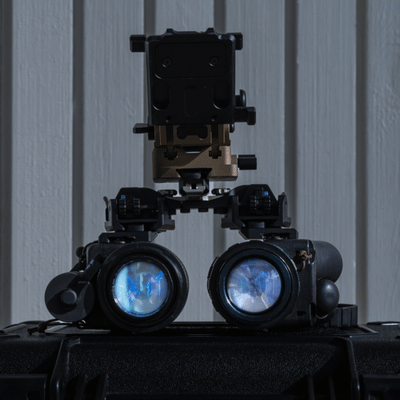
Start by assessing how your agency will use NVGs. Different roles need different gear:
- Monocular goggles (like PVS-14) for general patrol and tactical use
- NV riflescopes for precision marksmen
- Binocular goggles for pilots needing depth perception
Rural agencies in truly dark areas need the best military grade NVG with maximum amplification. Urban departments with ambient light might manage with slightly lower specs.
Plan Your Budget
Top-tier Gen 3 units run several thousand dollars each. Many departments start by outfitting specialized teams first. A 5-officer SWAT entry team might share 2-3 goggles initially.
Explore grant opportunities. The Department of Homeland Security has provided assistance through programs like CEDAP. According to EMS1, ITT partnered with DHS to supply PVS-14 kits to smaller agencies.
The night vision market is projected to reach $11.2 billion by 2028, driven by public safety demand (MarketsandMarkets). Growing competition means better prices for buyers.
Invest in Training
The National Tactical Officers Association stresses that proper training is essential. Operating with NVGs requires adjusting to depth perception changes and narrow field of view.
Training should cover:
- Basic operation and mounting
- Movement in dark environments
- Tactical drills and room clearing
- Shooting with NVGs
An NVG is only as effective as the operator. Budget for initial and ongoing training programs.
Plan Maintenance
NVGs are sophisticated instruments needing care. Protect tubes from bright light exposure. Store devices properly and follow service schedules.
Track battery usage and carry spares. Dead batteries make NVGs useless at critical moments.
Plan for eventual upgrades. Technology advances quickly in this field.
What is the generation of night vision goggles police use?
Most law enforcement agencies use Generation 3 night vision technology. Gen 3 offers the best image quality, range, and reliability for tactical operations. These are the same systems used by the U.S. military.
Can night vision goggles work in complete darkness?
Yes, but they need some light source. In absolute darkness, officers use infrared illuminators that work with NVGs. These IR lights are invisible to the naked eye but provide illumination for night vision devices.
How much do night vision goggles police use cost?
Quality Gen 3 night vision goggles typically cost $3,000–$8,000 per unit. Prices vary based on specs and features. Grant programs and trade-in options can help offset costs for agencies.
Do all police officers get night vision goggles?
Not typically. Most agencies prioritize tactical teams like SWAT first. They then expand to patrol units as the budget allows. Even specialized teams may share a few units strategically among key operators.
How long do night vision goggles last?
Modern Gen 3 tubes last approximately 10,000 hours of use according to Nightline Inc. With proper care and maintenance, the devices themselves can serve for many years. Tubes may eventually need replacement.
Is thermal imaging better than night vision for police?
Each has advantages. Night vision provides better detail for identification and navigation. Thermal imaging excels at detecting hidden people in open areas. Police Magazine notes many departments use both tools depending on the mission.
Night vision goggles police agencies deploy have become essential tools for modern law enforcement. They transform darkness into a tactical advantage. From SWAT operations to search missions, these devices improve safety and effectiveness. By choosing quality military grade NVG equipment, investing in training, and planning strategically, agencies can dramatically expand their nighttime capabilities. The technology is more accessible than ever in 2025.
Ready to equip your team with night vision capability? Contact us today for a consultation on the right NVG solution for your agency’s mission needs. Get a quote and discover how we can help your officers own the night.