(888) 632-8764
Night flying with helicopter night vision goggles has become standard practice by 2025. Emergency medical services, law enforcement, and search-and-rescue teams rely on this technology daily. While these devices greatly improve visibility in darkness, they also introduce unique risks.
Helicopter night vision goggles offer only a narrow 40-degree field of view. They reduce depth perception and show the world in monochrome. Bright lights cause “blooming” or glare. The goggles can’t see through clouds or fog.
These limitations require a professional approach. That starts with thorough preflight inspections.
Understanding Helicopter Night Vision Goggle Systems
Modern helicopter night vision goggle systems include more than just the goggles themselves. An NVG system integrates the goggles with aircraft lighting and cockpit modifications.
The goggles mount to the pilot’s helmet. They use image intensifier tubes to amplify starlight, moonlight, or infrared illumination. Popular models like the AN/AVS-9 are standard in the industry.
Both green-phosphor and white-phosphor technologies are in use today. White phosphor goggles provide a black-and-white image with better contrast and less eyestrain.
Aircraft modifications make helicopters “NVG-compatible.” Cockpit instruments must be dimmable or filtered to prevent internal glare. Exterior lighting may have infrared modes that illuminate terrain without blinding the NVGs.
The entire aircraft is part of the system. If any component fails—goggles, lighting, power supply, or mounting—it can compromise flight safety.
Critical Preflight Checks for Helicopter Night Vision Goggles
Before every NVG-assisted flight, pilots should inspect the equipment thoroughly.
Physical Condition of Goggles
Inspect the NVGs for physical damage or wear. Check for loose or broken parts. Verify that the mounting bracket is secure. Any damage means the NVGs should be removed from service. Never attempt makeshift fixes.
Power Supply and Batteries
Confirm the power source is working and properly installed. Turn the goggles on to ensure they power up. Always carry spare batteries. Many models have a low-battery indicator—verify it’s functional. A power failure in flight can instantly leave a pilot blind.
Optics and Lenses
Check that all optical elements are clean. Clean the objective lenses and eyepieces with approved lens tissue. Even a small smudge can degrade image quality.
Cup your hand over the lenses. Look for black spots, distortions, or uneven brightness. According to FAA guidance, any significant blemishes render the goggles unusable until repaired.
Focus and Image Clarity
Adjust the focus settings to obtain a sharp image at long distance. If a collimation device is available, use it to achieve precise infinity focus. Some operators require confirming minimum vision acuity before flight.
Helmet Mount and Alignment
Verify the NVG helmet mount is properly attached. The goggles should lock positively and latch firmly. Check that binocular tubes are centered to your eyes.
If using counterweights, make sure they’re in place. A loose mount can cause the goggles to shift during maneuvers. Practice flipping the goggles up and down quickly.
Cockpit Lighting Compatibility
Set all cockpit lights to NVG-friendly settings before engine start. View panels and displays through the NVGs. There should be no excessive glare.
Use lighting discipline:
- Dim or turn off non-essential lights
- Use NVG-compatible bulbs
- Ensure no flashlight shines into the goggles
External Lighting and Environmental Check
If the helicopter has an infrared searchlight, test its operation. Know how to switch between visible and IR modes.
Shiny surfaces like white wirestrike cutters can reflect landing light back into the cockpit. During the walk-around, verify such items are coated or taped.
Check weather and illumination conditions. NVGs require some light to function effectively.
Performing these checks methodically reduces the chances of failure. Skipping checks has been identified as a factor in past incidents.
Regular Helicopter NVG Maintenance and Inspection
These inspections are performed by certified technicians who check:
These inspections are performed by certified technicians who check:
- Internal alignment issues
- Image tube degradation
- Brightness balance and resolution
Helicopter NVG maintenance and inspection programs are just as important as preflight checks. NVGs are precision instruments that require regular care.
The FAA and manufacturers recommend helicopter night vision goggles maintenance and inspection every 180 days. These inspections are performed by certified technicians who check:
- Internal alignment issues
- Image tube degradation
- Brightness balance and resolution
Any NVG that fails is removed from service for repair.
Between formal inspections, practice good care:
- Install protective lens caps when not in use
- Store goggles in a padded case
- Remove batteries for long storage periods
- Clean lenses with appropriate solution
Never attempt to disassemble the NVG unit yourself. Only certified repair personnel should work on them.
Maintaining a logbook for each device is best practice. Record usage hours, issues observed, and inspection dates. This helps ensure aged tubes are replaced before they fail.
Training and Awareness for Safe NVG Operations
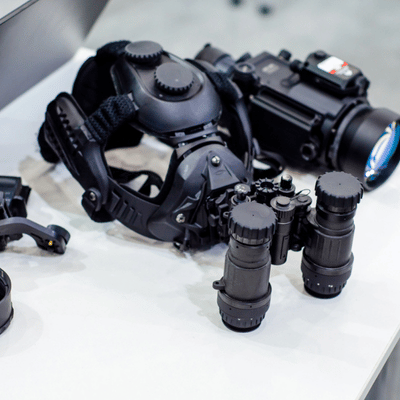
Aviation night vision goggles for pilots require thorough understanding. Pilots transitioning to aviation night vision goggles for pilots must realize that NVGs don’t turn night into day.
A common mistake is “over-flying” the aircraft—flying too fast at low altitude. By the time an obstacle appears, there’s little time to react.
Quality training covers:
- Scanning methodically for limited field of view
- Regular instrument cross-checks
- Transitioning to and from NVGs
- Emergency scenarios
The FAA mandates specific NVG training before pilots can act as pilot-in-command with NVGs.
For professional operators, continuous education remains important. Regular refresher training and proficiency flights keep skills current.
Aviation NVG training is not a one-time event. It’s an ongoing process.
Frequently Asked Questions
How often should helicopter night vision goggles be inspected?
Helicopter night vision goggles require comprehensive inspections every 180 days by certified technicians. Pilots should also perform detailed preflight checks before every NVG-assisted flight.
What is the most critical preflight check for NVGs?
Verifying battery power and testing cockpit lighting compatibility are critical. A power failure leaves you blind, and excessive glare degrades the NVG image significantly.
Can I clean my NVG lenses with regular glass cleaner?
No, never use regular glass cleaner. Always use approved lens-cleaning solution and lint-free lens tissue to prevent scratches and damage.
What happens if my NVGs fail during flight?
You should be trained to transition to unaided vision by flipping the goggles up. Always have a contingency plan and maintain proficiency without NVGs.
Do I need special training to fly with night vision goggles?
Yes, the FAA mandates specific NVG flight and ground training. This specialized knowledge is essential for safe operations.
What’s the difference between green and white phosphor NVGs?
White phosphor provides a black-and-white image with better contrast and less eyestrain. Green phosphor shows the traditional green view. Both work effectively when maintained.
Your Safety Starts with Preparation
Helicopter night vision goggles have increased the safety of night operations. They enable missions impossible with unaided vision. However, this capability comes with responsibility.
Diligent preflight checks are foundational. Strong maintenance prevents technical failures. Comprehensive training prepares pilots to understand limitations.
By 2025, regulators continue supporting NVG use. The FAA recently extended allowances for certain operations through 2027.
Ready to advance your NVG skills? Contact us today for professional aviation NVG training courses. Our experienced instructors provide hands-on training that keeps you safe. Get a quote now and elevate your night flying proficiency.