(888) 632-8764
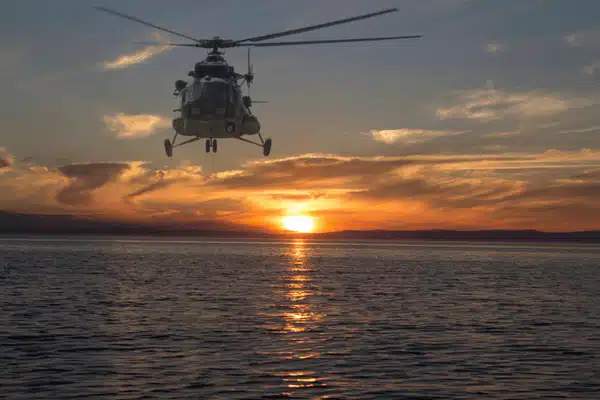
Flying helicopters at night can be dangerous without the proper equipment and training. Helicopter NVG training prepares pilots to fly safely after dark with night vision goggles. This specialized training has advanced beyond military use and now enables civilian pilots in emergency medical services, search and rescue, and law enforcement to fly confidently after the sun goes dark.
Table of Contents
Why Helicopter NVG Training Matters for Pilots
Night flying poses significant risks that daytime pilots never experience. In the dark, you lose track of visual references. Hidden impediments become invisible. The terrain merges into the darkness.
These challenges are addressed by night vision training, which shows how to use NVGs effectively and safely. These goggles make gloomy landscapes visible with a green tint. They do, however, present new difficulties:
- Limited field of view – You only see about 40 degrees, which is much narrower than normal vision.
- Changed depth perception – It can make it harder to judge distance and spacing accurately.
- Blooming from bright lights – Bright lights can wash out your view for a moment.
- Equipment limitations – Battery life, mounting setup, and upkeep can also affect use.
The FAA requires formal helicopter NVG training before you can act as pilot-in-command with goggles. This isn’t optional. The training ensures you understand both the benefits and the risks.
Numerous accidents have been avoided thanks to proper training. Accident rates are higher for pilots who use subpar programs or neglect night vision training. It is evident from the data that effective training saves lives.
How Night Vision Goggles Actually Work
Understanding how do night vision goggles work helps you use them better. These devices amplify tiny amounts of light from stars, the moon, and even invisible near-infrared wavelengths.
Here’s the basic process:
- Light photons enter the goggle lens
- They hit a photocathode that converts light to electrons
- Electrons multiply through a microchannel plate
- A phosphor screen converts them back to visible light
- You see a bright green (or white) image
Modern aviation NVGs use Generation 3 technology. These systems provide high amplification with better clarity. Some newer models use white phosphor instead of green, which many pilots find easier on the eyes.
The key difference for aviators is the helmet mounted design. Your goggles attach to your flight helmet, not your hands. You can flip them up or down quickly. This leaves your hands free for flying, but the extra weight can cause neck strain on long flights.
What You’ll Learn in Helicopter NVG Training Programs
Professional helicopter NVG training includes both ground school and flight instruction.
Ground School Basics
Your classroom training covers:
- NVG technology and generations – Understanding your specific equipment
- FAA regulations – Including 14 CFR 91.205(h) for aircraft lighting
- Human factors – How your eyes adapt to darkness and manage fatigue
- Safety procedures – Protecting your natural night vision with red lighting
- Scanning techniques – Compensating for the narrow field of view
You’ll learn why certain procedures matter. For example, avoiding bright lights before missions protects your natural night vision. Red cockpit lighting prevents overwhelming your goggles.
Flight Training Experience
The flight portion puts theory into practice. You’ll complete several hours with an instructor, including:
Pre-flight procedures:
- Examining and adjusting your goggles
- Verifying battery levels, focus, and alignment
- Setting up the lighting in the cockpit for NVG
In-flight maneuvers:
- Basic flight (climbs, descents, straight-and-level)
- Hovering – The most challenging NVG skill
- Low-level navigation through dark terrain
- Reading landscape features through your goggles
Emergency procedures:
- Autorotations, or simulated engine failures
- Failures of the system in the dark
- Making the switch from aided to unaided vision
Training also covers crew coordination. Many NVG operations use two-pilot crews. You’ll practice dividing tasks so one pilot scans outside while the other monitors instruments.
Building Skills with Helmet Mounted Systems
New methods are required for helmet-mounted night vision goggles. A number of essential skills will be the focus of your training.
Pattern scanning is crucial. You have to actively scan your surroundings because of your limited 40-degree view. Move your head through sectors in a methodical manner. Create a comprehensive image by scanning systematically rather than haphazardly.
The look-under technique solves a common problem. NVGs focus beyond 50 feet. Cockpit instruments are too close to see clearly through the goggles. You’ll learn to glance under the goggles for close-up tasks, then return to the amplified outside view.
Equipment handling becomes second nature through practice:
- Mounting and securing the goggle unit
- Adjusting eyepiece spacing for your eyes
- Setting proper tilt and position
- Keeping lenses clean
- Managing dual battery packs
- Flipping goggles up and down smoothly
These physical skills require repetition. Your training builds muscle memory so NVG operation becomes automatic during critical flight phases.
Staying Current with Your NVG Qualification
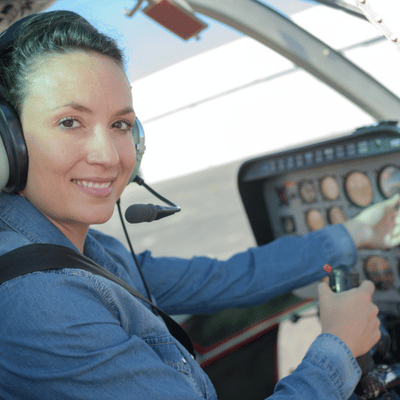
Initial helicopter NVG training is just the start. Your skills will fade without regular practice.
The FAA requires specific currency for NVG operations:
- With passengers: Recent NVG flight tasks within 2 calendar months
- Without passengers: NVG experience within 4 months
Required tasks include takeoffs, landings, hovering, and transitions between aided and unaided vision.
Many operators schedule annual refresher courses. These programs include:
Ground updates:
- Shifts in regulations
- Orientations to new equipment
- Lessons learned from recent events
Flight practice:
- Methods for NVG scanning
- Procedures for landing and approach
- Emergency exercises
- Breaking bad habits
Regular training keeps you sharp. It also ensures compliance with safety standards. Organizations using NVGs—from police air units to air ambulance services—maintain ongoing training programs for their crews.
How long does helicopter NVG training take?
Most initial NVG training programs require 8-16 hours of ground school and 5-10 hours of flight instruction. The exact duration depends on your experience level and the training provider’s curriculum.
Can civilian pilots get NVG certified?
Yes, helicopter NVG training is available to civilian pilots. While NVG technology started in the military, it’s now common in emergency medical services, search and rescue, law enforcement, and private operations.
What are the physical specifications for employing NVGs?
To support the extra weight of your helmet, you must have appropriate neck strength. Most pilots adapt quickly, but longer flights might cause tiredness. Training consists of techniques and exercises for properly managing neck discomfort.
Do I need special equipment in my helicopter for NVG operations?
Yes, your aircraft must meet FAA lighting requirements under 14 CFR 91.205(h). This includes proper lighting compatible with night vision goggles. Your training will cover these equipment requirements in detail.
How much do night vision goggles cost in aviation?
Aviation-grade Generation 3 NVGs typically cost $8,000 to $15,000 per unit. Prices vary depending on features, with newer white phosphor ones being costlier. Many training programs incorporate goggles for instruction.
Is NVG training needed by law?
Yes, the FAA requires pilots to undergo particular ground and flight training before operating as pilot-in-command with night vision goggles. This training is legally mandatory and not elective.
Ready to Expand Your Night Flying Capabilities?
Helicopter NVG training can open new doors in your aviation career, but the real advantage comes from learning with a provider that understands both the technology and the mission. At Night Flight Concepts, you work with an FAA-approved training provider founded by former Army aviation operators, backed by decades of aviation NVG experience and a team that has trained more than 500 pilots and crew members.
Their services go beyond ground school and flight instruction to include initial and recurrent NVG training, instructor pilot certification, maintenance training, aircraft NVG support, and inspection and repair services through an FAA Part 145 NVG repair station.
That depth of experience matters when you are flying EMS, law enforcement, search and rescue, military, or commercial missions after dark. Night Flight Concepts helps crews build the judgment, safety habits, and mission-ready skill needed to operate confidently in low-light conditions, whether training takes place at their Waco facility or at your location.
Take the next step toward safer, more capable night operations by requesting a quote for initial qualification, recurrent training, or a custom helicopter NVG program built around your aircraft, crew, and mission needs.