(888) 632-8764
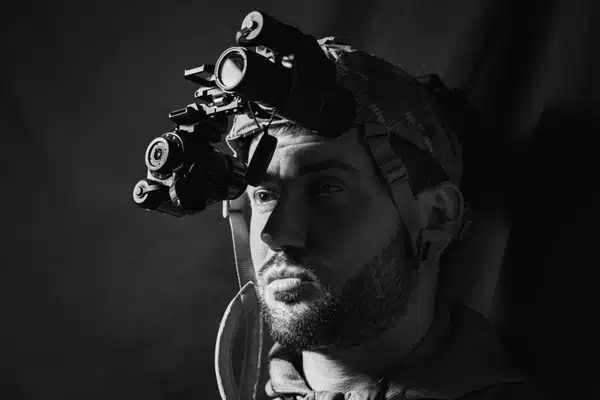
When it comes to night vision goggles, pilots must make a key decision. Should you use NVG white phosphor technology or classic green? This selection affects everything from image sharpness to eye fatigue during night flights. Pilots can see in the dark using both white and green phosphor night vision goggles. However, they do things differently. Understanding these distinctions will allow you to select the best tool for your aircraft and mission.
Table of Contents
How NVG White Phosphor Differs from Green
Both systems use the same core technology. They amplify ambient light through an image intensifier tube. The difference? The phosphor screen that displays the image.
Green phosphor (P43) shows everything in shades of green. This has been the standard for decades.
White phosphor (P45) displays a black-and-white grayscale image. This is the newer option gaining popularity.
Gen 3 night vision white phosphor represents the latest advancement in aviation goggles. Many experts call it the first major breakthrough since Generation III technology arrived. The NVG white phosphor display provides a more natural viewing experience compared to traditional green screens.
Image Quality and Contrast
White phosphor night vision goggles deliver sharper images with better contrast. This matters most in low-light rural areas or during moonless nights.
Key advantages of white phosphor:
- Higher contrast makes terrain features easier to spot
- Better detail recognition in dark conditions
- More natural-looking scenes in grayscale
- Improved depth perception
Studies show that NVG white phosphor screens provide superior target recognition. Pilots can distinguish subtle details more easily. For example, you can spot people or objects on unlit terrain with less effort.
Green phosphor still works well for most flying situations. But the lower contrast can make fine details harder to see against complex backgrounds.
Eye Comfort During Long Flights
Many pilots report less eye strain with NVG white phosphor systems. The grayscale view feels more natural to the human brain.
Green imagery causes more visual fatigue during extended missions. While our eyes are sensitive to green light, the constant green glow doesn’t match how we normally see the world.
Field reports from helicopter crews confirm this difference. Gen 3 night vision white phosphor goggles allow comfortable operation during longer shifts. Green phosphor may cause more fatigue after several hours of flying.
This comfort factor matters for:
- Air ambulance workers performing long shifts.
- Law enforcement on long patrols
- Search and rescue efforts.
- Multiple-hour night training flights.
Best Use Cases for Aviation
Neither option is perfect for every situation. Your mission and environment guide the best choice.
White phosphor excels in:
- Rural or distant places with limited lighting.
- Operations near the ocean or in the desert
- Moonless night flights
- Search and rescue missions.
- Operations requiring exquisite detail recognition.
Green phosphor works well for:
- Urban environments with bright city lights
- Missions near airports with heavy lighting
- Operators on tight budgets
- Crews already trained on green systems
Bright lights once posed challenges for early white phosphor systems. Modern auto-gated tubes fixed this issue. Today’s NVG white phosphor units handle mixed lighting conditions effectively.
A 2024 Aerospace Medicine and Human Performance study of 127 military pilots found that both green (P43) and white (P45) NVG displays gave “satisfactory visibility,” advised users to try both colors before choosing, and showed that prior NVG experience strongly shaped screen-color preference.
The pricing disparity has shrunk dramatically. As of 2026, NVG white phosphor costs only little more than green. Vertical Magazine (July 24, 2023) reports that white-phosphor aviation NVGs cost only about US$150 more than green on US$10,000–$12,000 systems. For most aircraft users, the little price is well worth the improved performance.
Training and Adaptation

Proper helicopter NVG training is essential regardless of which color you choose. Transitioning from daylight vision to NVGs requires skill and practice.
Critical training elements include:
- Scanning techniques for maximum awareness
- Recognizing visual illusions at night
- Adjusting for different light conditions
- Interpreting instrument lighting through goggles
- Judging distances and terrain
The majority of perceived limitations of either NVG type can be solved by training. Well-trained pilots can easily flip from white to green.
Helicopter NVG training programs explain that each kind has its own idiosyncrasies. The foundations, however, apply equally to both. The distance judgment and cockpit lights may appear slightly different. However, with sufficient training, pilots can adjust fast.
Some operators recommend that trainees be exposed to both systems. Understanding how each portrays nighttime scenes gives pilots more options.
Is white phosphor better than green for helicopters?
White phosphor offers better contrast and causes less eye fatigue. But both work well for helicopter operations. Your specific mission and personal preference should guide the choice.
Do white phosphor NVGs cost more?
The price difference is currently insignificant. On comparable devices, white phosphor is often slightly more expensive than green. Most aviators find this modest price worthwhile.
Can I quickly switch between white and green NVGs?
Yes, with sufficient training. The foundations of NVG white and green functioning are same. When switching types, most pilots adjust quickly.
Which color is ideal for city flying?
Both work in urban areas. Modern white phosphor systems perform effectively under bright lighting conditions. Green phosphor had a modest historical advantage, but the gap has shrunk.
How long does it take to adjust to white phosphorus?
Most pilots adjust within a few flights. The greyscale image appears natural because it is comparable to how humans view without color. Training speeds up the adaptation process.
Are white phosphor goggles available for civilian pilots?
As of February 2026, Aviation Specialties Unlimited lists its Gen 3 AN/AVS-9 White Phosphor NVG as “FAA TSO C164a and EASA certified,” and an ASU/L3 press release republished by Vertical Magazine notes L3 received FAA TSO-C164a authorization for its M949 aviation NVGs, supporting that FAA-certified white-phosphor aviation NVGs are available to civil operators.
Make the Right Choice for Your Mission
Both white and green phosphor NVGs improve nighttime flight safety. White phosphor improves contrast and minimizes fatigue. Green phosphor provides proven reliability at a little reduced cost.
The ideal decision is determined by your flying environment and comfort level. Test both types, if possible, before making a decision.
Ready to upgrade your night vision capabilities? Start with training first. Lock in a helicopter NVG training slot. Our team specializes in helicopter nvg training and can help you make an informed choice. Get a quote now and fly safer at night.