(888) 632-8764
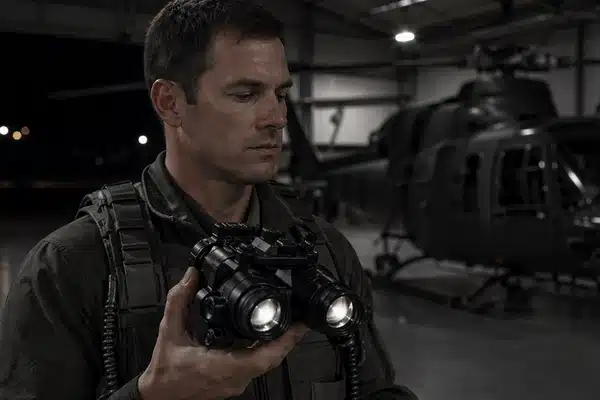
Instead of the traditional green glow, white phosphor night vision goggles provide users with a grayscale view. Although many pilots and tactical teams share that opinion, tube specifications, aircraft lighting, and training ultimately determine the outcome. The greatest option for aviation crews is one that works with the entire NVIS system, not just the screen color.
Table of Contents
What White Phosphor Means
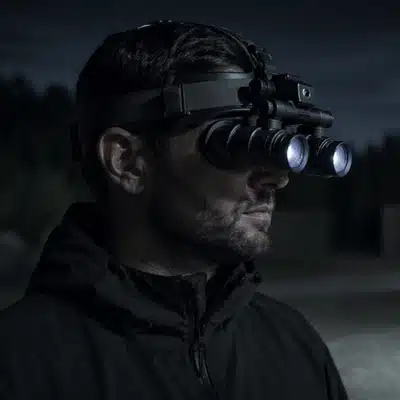
White phosphor uses a P45 screen to show an achromatic, grayscale image. It is still image intensifier tech, not full color night vision. Buyers often search NVG white phosphor when they want that cleaner gray view. Many also shop for gen 3 night vision white phosphor units because Gen 3 tubes remain the standard for serious aviation use.
A good military grade NVG is not “better” just because it is white. Signal-to-noise ratio, resolution, halo, and EBI still shape what you see in low light. That is why phosphor color should come after mission fit and tube quality.
Why Operators Prefer White Phosphor Night Vision Goggles
Many users find that long scans are easier to examine in grayscale. That can help with scene reading and comfort. The green and white phosphor displays in the test configuration did not differ in terms of visual performance, according to a PubMed-indexed study. Another pilot study conducted in 2024 found that prior use of green NVG affected desire, suggesting that habits can affect what appears to be “optimal.”
What usually changes
- Scene feel: Grayscale can look more natural.
- User preference: Prior training can shape comfort.
- Buying interest: More teams now ask for white phosphor.
What does not change
- Need for training
- Need for good tube specs
- Need for proper aircraft or unit setup
Aviation Factors That Matter Most
NVGs are only one part of the full NVIS system
Compatible Aircraft Lighting
Trained Flight Crews with Proper NVG Training
Accepted Maintenance Program
Clear SOPs and Regular Cockpit Inspections
FAA guidance says NVGs are only one part of the full NVIS system. Safe use also needs compatible aircraft lighting, trained crews, and an accepted maintenance program. The FAA also says a TSO is a minimum standard, not a stand-alone approval to install and use the item on an aircraft.
Color is not as important as that. Another issue with LED lighting is that some lights that are visible to the unaided eye might not be clearly visible with NVGs. White phosphor night vision goggles for civil personnel should be used in conjunction with rigorous training, cockpit inspections, and robust SOPs. Night Flight Concepts claims to be an FAA-approved provider of instructor, initial, and recurring NVG training.
Tactical and Buying Reality
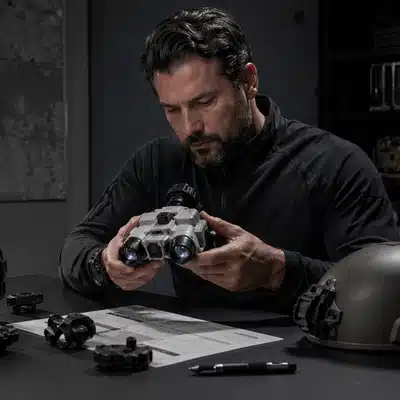
Ground teams often work in mixed light, bright spill, and fast changes in contrast. In that setting, buyers should look past color alone and review halo control, autogating, and overall tube quality. L3Harris says FoM does not tell the whole story, which is a key point when comparing gen 3 night vision white phosphor options or any other setup.
Recent Army awards also show that white phosphor night vision goggles are now part of the modern baseline, not a niche option. In April 2026, L3Harris announced a BiNOD award worth up to $465 million. In March 2026, Exosens said Photonis Defense received a BiNOD contract with a maximum value of $352.6 million. A military grade NVG still has to match the mission, support plan, and user training.
How to Choose the Right Setup
- Let’s begin with the mission. The gadget is stressed in various ways by the cockpit, EMS, SAR, law enforcement, and ground use.
- Examine the tube specifications. Examine not just color but also SNR, resolution, halo, EBI, and autogating.
- Comply with the entire system. As important as the goggle are aircraft lighting, crew uniformity, and maintenance.
- Before you pass judgment, train. Often, a little experiment with both types of phosphor provides more information than a specification page.
Are white phosphor night vision goggles better than green?
Not by color alone. Research found no clear visual performance edge from phosphor color by itself, though many users still prefer the grayscale view.
Is NVG white phosphor full color night vision?
No. NVG white phosphor still uses image intensifier tech and shows a grayscale image, not true color.
What does gen 3 night vision white phosphor mean?
Gen 3 night vision white phosphor means a Gen 3 image intensifier tube with a white phosphor screen. It is popular because it pairs proven tube tech with the grayscale look many operators want.
Is a military grade NVG the right choice for civil aviation?
Although civil use still hinges on aircraft certification, illumination compatibility, and training, a military-grade NVG can be a good fit. System fit and FAA regulations come first.
Do specific training requirements apply to white phosphor night vision goggles?
Yes. White phosphor night vision goggles should only be used in a trained NVIS program because they initially increase workload. Formal education and established procedures are emphasized in both FAA guidance and Night Flight Concepts.
White phosphor night vision goggles may be a strong option, but safer and more effective night operations still come down to the full system: the right specs, the right aircraft setup, and the right training. Night Flight Concepts brings more than a product pitch to that decision. The company is an FAA-approved training provider, offers initial, recurrent, and instructor NVG training, has trained more than 500 pilots and crew members, and uses instructors with decades of aviation NVG experience.
If you are building a new NVG program, upgrading an existing one, or choosing mission-fit equipment, request a quote or book aviation NVG training with Night Flight Concepts to get a program built for real flight demands, not just brochure claims.