(888) 632-8764

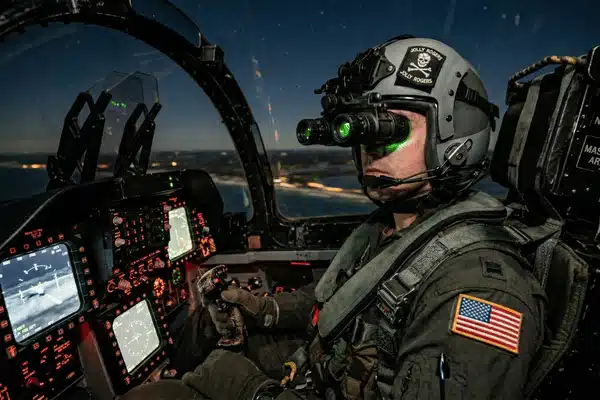
The night vision goggles used by US military crews vary by task. Helicopter pilots need gear suited to flying, while soldiers need goggles that work on foot. Here’s how the different models compare.
Table of Contents
Current Night Vision Goggles Used by US Military Forces
The US military uses several types of night vision goggles (NVGs). Some work best in aircraft, while others suit ground missions.
Aviator NVGs: AN/AVS-6 and AN/AVS-9
The AN/AVS-6 and AN/AVS-9 are the standard helmet-mounted night vision goUS flight crews have used the AN/AVS-6 and AN/AVS-9 for years. Both attach to flight helmets and provide a 40-degree field of view.
These goggles help pilots during night landings and rescue flights. Approved AN/AVS-9 setups are also used in civilian aviation.
Ground Forces: PVS-14, PVS-31A, and BNVD-1531
Soldiers on foot need goggles that won’t weigh them down. These three models are common choices:
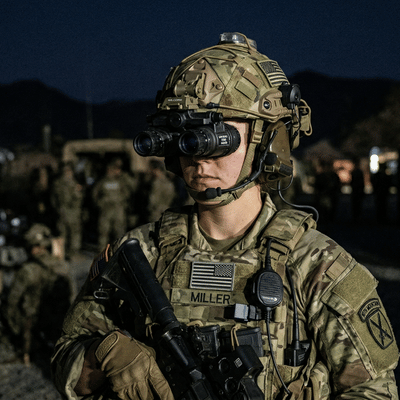
- AN/PVS-14: Uses one tube and covers one eye. It’s often worn during patrols.
- AN/PVS-31A: A lighter, two-tube model used by special operations teams.
- BNVD-1531: Binocular goggles with a built-in infrared light.
Advanced Systems: ENVG-B and SBNVG
The Army’s ENVG-B lets soldiers see faint light and heat through the same goggles. This makes people and warm objects easier to spot after dark.
The Marine Corps also uses the Squad Binocular NVG (SBNVG), which supports a thermal attachment.
Military NVG Models: Features, Prices, and Availability
Civilian buyers can find military-grade NVGs for sale in the US. What you’ll pay depends on the tubes, condition, and included accessories.
| Model | Main Use | Typical US Price | Civilian Availability |
| AN/PVS-14 | Ground operations | 3,300–5,450 | Widely sold |
| AN/PVS-31A | Special operations | 12,300–14,000 | Select dealers |
| AN/AVS-9 | Aviation | 11,000–12,300 for non-certified ANVIS-type units | Flight-ready versions require a quote |
Prices reflect 2026 US listings and can change. An ANVIS-style model is not always approved for flight. Buyers must check the exact unit’s FAA approval and export limits.
How Gen 3 Night Vision White Phosphor Works
Most modern night vision goggles used by US military personnel use Gen 3 image intensifier tubes.
These tubes collect faint light from the moon and stars. They then boost that light to produce a brighter image.
White phosphor shows objects in shades of gray rather than green. Some users find this easier to view during long missions.
Three features are worth checking:
- Figure of Merit (FOM): Tube resolution multiplied by the signal-to-noise ratio.
- Auto-gating: Helps the image handle sudden changes in light.
- Tube lifespan: Many Gen 3 tubes are rated for around 10,000 hours.
Helmet-Mounted Night Vision Goggles: Fit and Integration
Even lightweight goggles can strain the neck after hours of use. A properly fitted helmet helps stop the goggles from moving around.
Flight crews often pair ANVIS mounts with approved helmets. Cockpit lights must also be NVG-friendly so they don’t cause glare.
FAA TSO-C164a sets performance standards for new civilian aviation NVGs. It calls for matched binocular tubes rather than a single-eye device.
Thermal Imaging and Fused NVG Systems
Regular NVGs boost existing light. Thermal cameras work differently because they detect heat.
Combining both systems gives crews a better view of their surroundings. For example, a soldier can spot a warm vehicle while still seeing nearby terrain.
The ENVG-B uses this approach, while the SBNVG supports a clip-on thermal sensor.
Standards, Certification, and Training
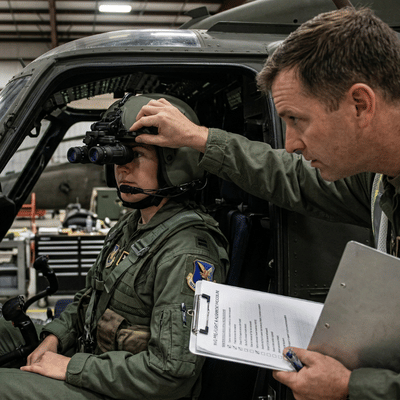
Flying with NVGs takes more than putting on a helmet. Pilots must understand how the goggles affect depth, distance, and visibility.
Under 14 CFR 61.31(k), most civilian pilots need ground and flight training with an authorized instructor. They must also receive the required endorsements.
Training covers:
- Adjusting goggles and checking cockpit lighting.
- Spotting visual illusions and judging distance.
- Handling takeoffs, landings, and emergencies.
Pilots must also meet FAA recent flight experience or proficiency check requirements.
How much do military-grade NVGs cost civilians?
Expect to spend $3,300 to $5,450 on a new Gen 3 PVS-14 in the US. A PVS-31A costs considerably more, often over $12,000. Aviation models vary in price, so ask what comes with the unit before buying.
Where can civilian pilots get FAA-approved NVG training?
Look for an aviation training provider with qualified NVG flight instructors. Night Flight Concepts offers initial and recurrent courses for pilots and flight crews. Check that the training covers your aircraft and the type of flying you plan to do.
What are the differences between green and white phosphor NVGs?
Green phosphor gives the image a green tint. White phosphor shows the same scene in shades of gray. Which looks better comes down to personal comfort and the quality of the tubes.
How do you maintain and inspect aviation NVGs?
Give the goggles a quick check before each flight. Look at the lenses, batteries, mounts, and image for anything unusual. Clean and store them as directed, and follow the approved inspection schedule, often every 180 days.
What night vision goggles does the US military use most?
It depends on who’s wearing them. Pilots have long used the AN/AVS-6 and AN/AVS-9, while the PVS-14 is common among ground troops. Some special operations teams also wear dual-tube models like the PVS-31A.
Why are helmet-mounted NVGs better than handheld devices?
Helmet-mounted goggles leave both hands free for other tasks. This is especially useful when pilots need to control an aircraft. A secure mount also keeps the lenses aligned with the user’s eyes.
Does flying with NVGs require specialized training for civilian pilots?
Yes, pilots can’t simply buy a set of goggles and start flying at night. FAA rules call for NVG training and the right endorsements. They also need recent NVG flight experience or a proficiency check to stay current.
What is the ENVG-B, and who uses it?
The ENVG-B is a binocular night vision system used by the US Army. It combines light amplification with thermal imaging in one device. This helps soldiers detect heat while still seeing details in their surroundings.
The night vision goggles that the US military uses serve different roles, from helicopter flights to ground patrols. Choosing the right model matters, but proper training and regular inspections are just as important. Need help choosing aviation NVGs or arranging flight training? Book your NVG training or request a quote from Night Flight Concepts today.