(888) 632-8764
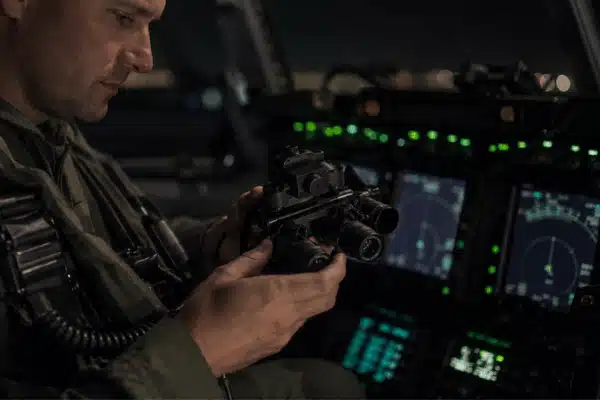
Flying at night can make it harder for crews to spot hazards and respond quickly. Gen 3 night vision goggles improve visibility by making use of the small amount of light already present. For aviation teams, though, choosing goggles is not only about getting a brighter image. The equipment also needs to suit the aircraft, the mission, and the crew using it.
Table of Contents
What are Gen 3 Night Vision Goggles?
Gen 3 NVGs brighten low-light scenes by using image intensifier tubes. They work with light from the moon, stars, ground lights, and other nearby sources.
The U.S. Department of Homeland Security notes that Gen 3 systems use a gallium arsenide photocathode. It helps the tube respond well to visible and near-infrared light. A microchannel plate then boosts the electron signal before the image reaches the user’s eye.
Many newer Gen 3 tubes also include features such as:
- Autogating for changing light levels
- Green or white phosphor
- Improved low-light response
- Better signal-to-noise performance
- Longer tube service life
Some Gen 3 tubes are rated for about 10,000 hours of use. Actual life depends on care, storage, operating conditions, and tube quality.
Why Aviation Crews Use Gen 3 NVGs
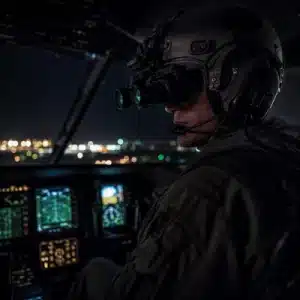
Aviation night vision goggles give pilots more visual information when natural light is limited. They can make terrain, landing zones, and nearby features easier to pick out.
They are used in several types of flight work, including:
- Air medical transport
- Police aviation
- Search and rescue
- Military operations
- Aerial firefighting
- Agricultural flying
NVGs still have limits. They do not turn poor weather into safe flying conditions, and they do not replace standard flight instruments.
There is also an issue with certain LED obstruction lights. The FAA has warned that some LEDs may be difficult to see through NVGs. Pilots should continue using unaided scans during night operations.
Gen 3 vs. Other Night Vision Systems
| Technology | How It Works | Good For | Main Limit |
| Gen 2 NVG | Amplifies available light | General low-light use | Lower sensitivity than Gen 3 |
| Gen 3 NVG | Uses a GaAs photocathode | Aviation and very low light | Still needs usable light |
| Thermal | Detects heat | Finding heat sources | Shows a different type of image |
| Digital | Uses a camera sensor | Recording and viewing | May need IR help in deep darkness |
Thermal equipment and night vision goggles, Gen 3 systems are built for different jobs. Thermal devices show heat differences. Gen 3 goggles keep more of the visual detail pilots use for terrain and navigation.
What to Look for Before Buying
A good aviation NVG purchase starts with the aircraft and the mission. Tube specifications matter, but they should not be the only deciding factor.
Check Aircraft Compatibility
The goggles need to work with the aircraft’s approved Night Vision Imaging System, or NVIS.
Cockpit lighting matters too. Poorly matched lighting can create glare, blooming, or image problems through the goggles.
Under 14 CFR 91.205(h), required NVG equipment must be installed, working, and approved for the intended operation.
Compare Tube Performance
Do not judge a system only by a label such as Gen 3 or Gen 3+.
Look at the actual tube specifications, including:
- Resolution
- Signal-to-noise ratio
- Photocathode response
- Halo performance
- Tube age and condition
- Phosphor type
- Autogating
TSO-C164a sets minimum performance standards for certain aviation NVGs. Meeting a TSO standard does not by itself approve a goggle for every aircraft. Operators still need to confirm aircraft and NVIS compatibility.
Ask About Service History
Used or upgraded goggles should come with clear service records. Check when the tubes were installed, when inspections were completed, and whether repairs were made.
Parts support also matters. A low-cost pair of goggles may become expensive if service or replacement parts are hard to find.
What to Look for Before Buying Aviation NVGs
Start with aircraft compatibility and mission needs, then compare tube quality and service support.
Check Aircraft Compatibility
Make sure the goggles work with the aircraft’s approved NVIS setup.
- Confirm NVIS compatibility
- Check cockpit lighting
- Watch for glare or blooming
- Verify operational approval
Compare Tube Performance
Do not rely only on labels like Gen 3 or Gen 3+.
- Resolution
- Signal-to-noise ratio
- Photocathode response
- Halo performance
- Tube age and condition
- Phosphor type and autogating
Ask About Service History
Used or upgraded goggles should come with clear records.
- Check tube installation date
- Review inspections
- Ask about repairs or upgrades
- Confirm parts and service support
FAA and EASA Requirements
FAA rules require pilots to complete NVG ground and flight training before acting as pilot in command using goggles.
Under 14 CFR 61.31(k), training covers subjects such as NVG operation, limitations, preparation, flight tasks, and emergency procedures.
Recency rules also apply. Under 14 CFR 61.57, pilots generally need the required NVG experience within the previous four calendar months. Different recency rules apply when carrying passengers during NVG operations.
European operators follow a separate system. EASA’s current Air Operations rules include SPA.NVIS requirements for equipment, crews, operating procedures, and documentation.
Training, Inspections, and Upgrades
Training should prepare crews for more than normal flight. Pilots need practice with scanning, depth limits, changing light, emergencies, and moving between aided and unaided vision.
Regular inspection is also important. Night Flight Concepts provides 180-day aviation NVG inspections through its FAA-authorized repair capability.
An upgrade may be a good option when an older housing is still in usable condition. Some eligible systems can receive newer Gen 3 tubes without replacing the entire goggle.
This can also apply to some military night vision goggles, Gen 3 systems, but approval and condition still need to be checked before civilian aviation use.
What Matters in 2026
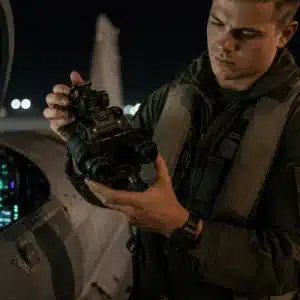
For NVG buyers in 2026, the tube generation label is only one part of the decision.
Features such as white phosphor, autogating, tube condition, and low-light performance deserve close attention. Aircraft compatibility and service support matter just as much.
Regulators also continue to treat NVGs as one part of a wider system. The goggles, cockpit lighting, aircraft approval, pilot training, and maintenance all need to work together.
Are Gen 3 NVGs legal for civilian pilots?
Yes. Civilian pilots can use approved aviation NVGs. The equipment and aircraft setup must meet the rules that apply to the operation. Pilots also need the required training and recent NVG experience.
Can aviation night vision goggles see through fog or clouds?
No. NVGs cannot see through dense fog, clouds, or heavy weather. They improve the light that is already available. Normal weather rules and flight limits still apply.
How often should aviation NVGs be inspected?
Many aviation NVG programs use a 180-day inspection schedule. The correct interval can also depend on the equipment and its approved maintenance documents. Operators should follow the instructions for their specific setup.
Is thermal imaging better than Gen 3 NVGs?
It depends on the task. Thermal imaging is useful for finding heat sources. Gen 3 NVGs give pilots a scene that is closer to normal vision, which helps with terrain, navigation, and landing.
Can military NVGs be used in civilian aircraft?
Not automatically. The equipment must be suitable for the aircraft, approved setup, and intended operation. Used military goggles should also be inspected before they are placed into aviation service.
The best NVG setup is not always the one with the newest label or the highest specification. It should fit the aircraft, mission, crew, and maintenance plan. Night Flight Concepts supports aviation operators with Gen 3 upgrades, inspections, training, and repair services. Get a quote today to discuss the right NVG setup for your operation.