(888) 632-8764
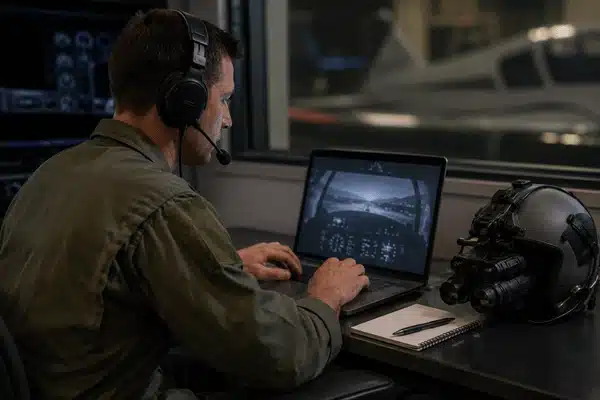
NVG online training is web-based ground training for pilots and crews who use night vision goggles. It teaches the rules, risks, equipment, and flight habits needed before in-air training. Online lessons can help you prepare faster, but they do not replace logged flight training with a qualified instructor.
Table of Contents
What Is NVG Online Training?
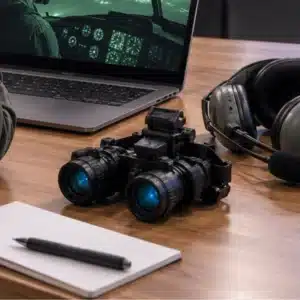
NVG online training is a computer-based ground school for night vision goggle use. It may include videos, quizzes, 3D lessons, and cockpit examples.
Night vision goggles help pilots see in low light by making dim light easier to view. Still, they have limits. Most aviation NVGs give a narrow field of view, often around 40 degrees. That means pilots must move their head, scan often, and stay aware of what is outside the goggle view.
Online training is useful for the ground portion of NVG learning. It can cover:
- NVG components and operation
- Night vision limits
- Human elements
- FAA regulations
- Planning a flight
- Emergency actions
- Coordination of the crew
Before employing NVGs as a pilot in command, pilots still require the appropriate flight training and endorsements.
Why Night Vision Goggles Training Matters
Night vision training matters because NVGs change how pilots see and fly. Goggles can improve night awareness, but they can also create new risks.
Pilots may face:
- Reduced side vision
- Poor depth cues
- Bright light glare
- Eye fatigue
- Loss of color detail
- Harder wire and tower detection
- Higher cockpit workload
The FAA requires both ground and flight training for most pilots who act as pilot in command using night vision goggles. Under 14 CFR 61.31(k), the training must include subjects like NVG limits, eye factors, normal and emergency use, scene reading, and flight planning.
The aircraft must also be set up for NVG use. Under 14 CFR 91.205(h), required equipment includes approved NVGs, proper aircraft lighting, a two-way radio, an artificial horizon, a generator or alternator, and a radar altimeter.
Good night vision goggles training helps pilots use the tool without trusting it too much.
How NVG Online Training Works
How NVG Online Training Works
Most programs blend online theory, simulator practice, and instructor-led flight training.
Online Ground School
Pilots complete computer-based lessons and review core NVG theory at their own pace.
Simulator or Device Training
Pilots practice scan routines, cockpit tasks, and lighting issues in a safer, lower-cost setting.
In-Flight Training
An authorized instructor evaluates real-world NVG use during actual flight tasks and transitions.
Most NVG programs use a blended format. This means pilots learn the theory online, then complete hands-on training later.
1. Online Ground School
The first step is usually CBT flight training. CBT means computer-based training. Pilots learn at their own pace and review key topics before meeting an instructor.
The FAASTeam says online NVG training can provide part of the training. It also states that its own NVG course does not, by itself, meet 14 CFR 61.31(k). This is why pilots must confirm how each online course fits into an approved training plan.
2. Simulator or Device Training
Pilots can practice cockpit duties, illumination problems, scan routines, and mission phases with the aid of a simulator. It can lower aircraft wear and fuel costs.
The market for helicopter simulators was estimated by Grand View Research to be worth USD 1.15 billion in 2024. Additionally, growth of USD 1.81 billion by 2030 was expected. This indicates a consistent need for less expensive and safer training equipment.
3. In-Flight Training
Flight training is where pilots apply the ground lessons. An authorized instructor checks the pilot’s use of NVGs during real flight tasks.
This may include:
- Preflight checks
- Lighting checks
- Takeoff and climb
- Cruise scan
- Descent and landing
- Emergency steps
- Aided and unaided flight changes
Night Flight Concepts offers FAA-approved aviation NVG training for initial, recurrent, and instructor pilot needs. Their training page also describes ground, virtual, classroom, and in-flight instruction.
What a Complete NVG Course Covers
A strong NVG course should teach more than how to turn the goggles on. It should show pilots how to use NVGs safely during real missions.
| Training Area | What Pilots Learn |
| NVG equipment | Tubes, batteries, focus, mounts, and fit |
| Human factors | Eye limits, fatigue, glare, and scan habits |
| FAA rules | 14 CFR 61.31(k), 61.57(f), 61.57(g), and 91.205(h) |
| Aircraft setup | NVG lighting, radios, radar altimeter, and cockpit checks |
| Flight tasks | Takeoff, cruise, descent, landing, and emergency use |
| Mission use | EMS, law enforcement, SAR, utility, and patrol work |
| Maintenance basics | Care, inspection, storage, and service needs |
Pilots also need to know the recent flight experience rules. Under 14 CFR 61.57(f), pilots using NVGs with passengers must log required NVG tasks within the prior 2 calendar months. The rule includes takeoffs and landings when using NVGs for those phases, area tasks, aided-to-unaided transitions, and NVG operations.
NVG Training Trends in 2026
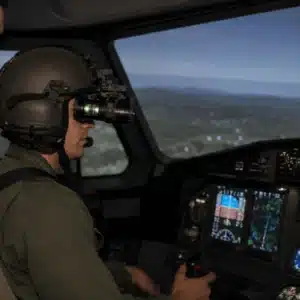
NVG training is becoming more flexible, but the goal stays the same: safer night flight.
CBT flight training is growing. Online modules help pilots prepare before class or flight time.
Simulators are more common. They help crews practice hard scenes without added aircraft risk.
White phosphor NVGs are more visible in the market. Training should explain how white and green phosphor images differ.
Mission-based training is more important. EMS, law enforcement, search and rescue, and utility crews need training tied to their real work.
Maintenance training matters more. Crews need to know how to check goggles, aircraft lighting, mounts, batteries, and records.
Can NVG training be done fully online?
No. Online training can help with ground school, but it does not replace required flight training. Pilots still need hands-on instruction and the right logbook or training record endorsement. Always check that your course fits your FAA training needs.
Is NVG online training FAA-approved?
It can be, when it is part of an approved training program. Online training alone should not be treated as a full NVG qualification. Ask the provider what FAA approval applies to the course.
Who needs night vision goggles training?
When using NVGs at night, pilots and crews must have the appropriate training. This comprises EMS, law enforcement, search and rescue, utilities, patrol, and some private operators. NVG care and inspection training is also beneficial for maintenance personnel.
What is the duration of NVG training?
The course, aircraft, and pilot requirements all affect how long it takes. A lot of programs start in the classroom or online. After that, a certified instructor completes flight training and checks.
Do pilots need recurrent NVG training?
Yes. NVG skill fades when pilots do not use it often. FAA’s recent experience rules also apply when pilots use NVGs as pilot in command.
Do NVGs work in total darkness?
No. NVGs need some light to create a useful image. Moonlight, starlight, and sky glow help. Heavy clouds, smoke, dust, or very dark terrain can reduce performance.
NVG online training is a smart way to start night vision training. It helps pilots learn the rules, risks, and equipment before flight. The safest path is still blended training: online ground school, simulator practice when approved, and in-flight training with a qualified instructor.
Ready to build safer night flight skills? Contact Night Flight Concepts to learn more or request a quote for aviation NVG training.