(888) 632-8764
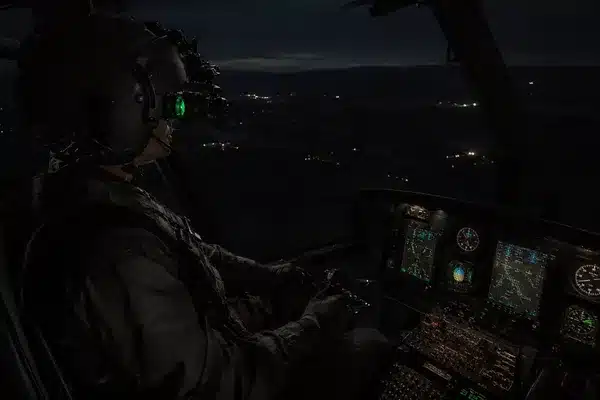
How does night vision work for pilots? Small amounts of visible and near-infrared light are collected by aviation night vision goggles. They intensify that light so the pilot can see it. The goggles are only one part of the setup. Safe night flying also depends on the aircraft, cockpit lighting, pilot training, and approved procedures.
Table of Contents
What Is NVIS in Aviation?
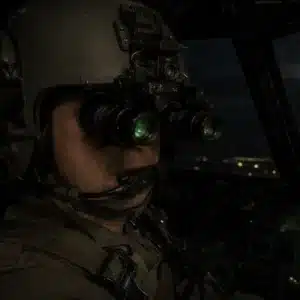
NVIS stands for Night Vision Imaging System. It includes the goggles, compatible aircraft lighting, and related equipment.
NVG refers to the goggles worn by the pilot. NVIS refers to the full aircraft setup that supports their use.
The pilot also needs proper training and clear procedures. A good system can still be unsafe when the crew has not learned how to use it.
How Does Night Vision Work?
Here is how the image forms inside the goggles:
- The front lens gathers light. This may come from the moon, stars, sky glow, or nearby lights.
- The photocathode changes light into electrons.
- The microchannel plate multiplies the electrons.
- The phosphor screen turns them into a bright image.
- The eyepiece sends that image to the pilot’s eye.
This process makes a dark scene easier to see. It does not create daylight or reveal every object.
Where Does the Light Come From?
Night vision goggles need some form of visible or near-infrared energy.
Common light sources include:
- Moonlight
- Starlight
- Light from nearby towns
- Reflected vehicle or building lights
- Infrared lights fitted to the aircraft
Infrared lights can help when natural light is weak. The pilot may not see the light without the goggles, but the NVGs can detect it.
What Pilots See Through NVGs
Pilots do not see a full-color image through aviation goggles. The display is usually green or white, depending on the type of phosphor used.
Both types show a single-tone image. White phosphor may look more natural to some users, but it does not provide true color.
The field of view is also much smaller than normal eyesight. Many aviation goggles show a view close to 40 degrees.
Pilots must move their heads while scanning. Looking straight ahead without a scan can leave hazards outside the visible area.
Bright lights may also cause:
- Glare
- Halos
- Blooming
- Loss of nearby detail
Rain, haze, dirty lenses, and cockpit reflections can make these effects worse.
Why Aircraft Lighting Matters
Cockpit lights must work with the goggles. A display that looks dim to the unaided eye may appear very bright through NVGs.
Too much cockpit light can wash out the outside image. It may also make terrain, obstacles, or landing areas harder to see.
Aircraft checks often include:
| Check | What It Reviews |
| Unaided cockpit check | Confirms the pilot can read the instruments without goggles |
| Aided cockpit check | Confirms the lights do not harm the NVG image |
| Flight check | Reviews the system during real flight tasks |
| Maintenance check | Confirms repairs have not changed the approved setup |
Turning down the instrument lights does not make an aircraft NVG-ready. The goggles and aircraft lighting must be approved for use together.
Limits of Aviation Night Vision
Pilots can see more with aviation night vision, but there are definite limitations.
- The image appears in tones of green or white, lacking true color.
- Pilots lose a significant portion of their typical side vision due to the narrow field of view.
- Modified depth cues: It might be more difficult to determine closing speed and distance.
- Weather effects: Details can be obscured by fog, clouds, smoke, rain, and haze.
- Bright lights: Glare or blooming may result from bright lights.
- Wires that are difficult to see: Thin wires may disappear into the sky or ground.
NVGs do not replace weather limits, flight instruments, maps, obstacle data, or sound pilot judgment.
Why Pilots Need NVG Training
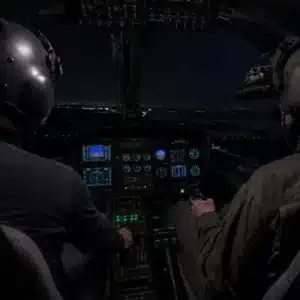
Knowing how night vision works is only the first step. Pilots also need to learn how the image affects normal sight and decision-making.
FAA rules generally require logged ground and flight training before a pilot acts as pilot in command during NVG operations. The pilot may also need instructor endorsements and recent flight experience.
Training may cover:
- Night vision and eye function
- Visual deceptions
- Scanning the scene
- Reading the terrain
- Lighting in aircraft
- Limitations of equipment
- Emergency actions
- Landings, takeoffs, and low-light flying operations
NVG skills can deteriorate, so regular practice is important. Pilots can review their areas of weakness and regain confidence with regular training.
Night Flight Concepts offers initial, continuing, and instructor-level aviation night vision training to pilots and crews.
Are night vision goggles functional in complete darkness?
Visible or near-infrared energy is required for passive goggles. There might be enough light from the moon, stars, and sky glow. When there is very little natural light, infrared lighting can be helpful.
Are thermal cameras and NVGs the same thing?
No. Light reflected from the scene is amplified by NVGs. Thermal cameras pick up heat from objects, terrain, and people.
Can pilots see wires through night vision goggles?
Some wires may appear when the light and background contrast are good. Others remain almost invisible. Pilots should never assume a wire will be easy to spot.
Is NVIS only used in helicopters?
No. Helicopters often use NVIS for medical, police, military, fire, and rescue flights. Fixed-wing crews may also use it for patrol, survey, fire, and other night missions.
Do pilots need special training for night vision aviation?
Yes. Most pilots need ground and flight instruction before using NVGs as pilot in command. They must also meet FAA endorsement and recent-experience rules.
Can pilots see color with white phosphor?
No. A single-tone image is still produced by white phosphor. Although it doesn’t display the true colors of the scene, it might appear softer or more natural.
When the pilot, goggles, aircraft, and procedures all support one another, NVIS functions at its best. With training, crews can read the image, understand its limitations, and make safer decisions after dark.
Are you prepared to improve your nighttime flying abilities? Make an NVG aviation training reservation with Night Flight Concepts right now.