(888) 632-8764
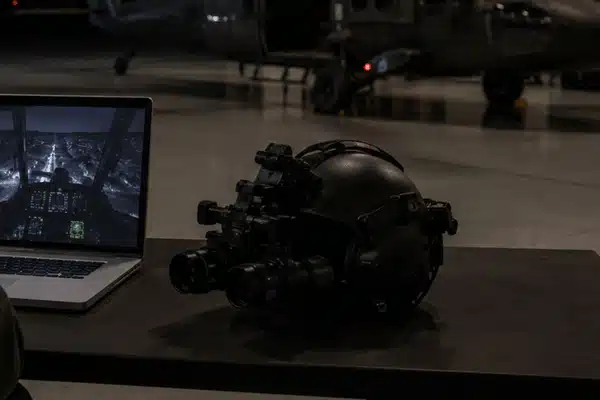
Night vision goggle online training helps pilots build the ground knowledge needed for NVG flight. FAA rules require logged ground and flight training before a pilot can act as pilot-in-command using NVGs. Online lessons can support the ground-school phase, but they do not replace flight training or the required endorsement.
Table of Contents
What Is Night Vision Goggle Online Training?
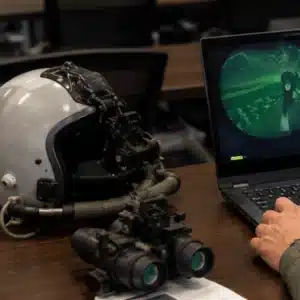
Night vision goggle online training is frequently the foundational component of a comprehensive NVG curriculum. Prior to simulator or aircraft training, it assists crews in studying important subjects.
A quality course could include:
- NVG limits and optics
- FAA guidelines for using NVG
- Visual hazards and human factors
- Fatigue and dark adaptation
- Equipment maintenance and inspections
- Lighting issues in the cockpit
NVGs help pilots see terrain, obstacles, and landing areas in low light. They amplify available light. They do not create light or remove all night flight risks.
NVGs can also narrow the field of view. They may affect depth, contrast, and distance cues. This is why night vision goggles training must go beyond basic device use. Crews need to know what NVGs can and cannot do.
Online lessons give crews a strong base. Live training helps them apply that knowledge in real flight tasks.
FAA Rules Pilots Need to Know
FAA rules do not say that every pilot flying at night must complete online NVG training. The rules apply when a pilot acts as pilot-in-command using NVGs.
Under 14 CFR §61.31(k), a pilot must receive and log ground training from an authorized instructor. The pilot must also get a logbook or training record endorsement.
The same rule requires logged flight training. An authorized instructor must find the pilot able to use NVGs safely before signing the endorsement.
Ground training mandated by the FAA consists of:
- FAA regulations pertaining to flight operations and NVG restrictions
- Eye adaptation and night vision
- Effects of lighting on night vision
- Cues of depth and distance at night
- Visual deceptions
- Use of NVG in regular, abnormal, and emergency situations
- Scene interpretation and NVG performance
- NVG terrain interpretation and flight planning
Instructor standards are also established by FAA regulations. NVG instructors must possess the appropriate pilot and flight instructor ratings in accordance with 14 CFR §61.195(k). They must also fulfill the documented NVG experience requirements and be NVG PIC qualified.
Recent flight experience also matters. Under 14 CFR §61.57(f), a pilot needs recent NVG operating experience to act as PIC in NVG operations with passengers. This includes logged tasks within the two calendar months before the month of the flight.
How NVG Training Is Delivered
A strong NVG online training course is usually part of a blended program. It may start online, then move into a simulator or aircraft training.
| Training Phase | Format | What Crews Learn |
| Ground school | Online or classroom | NVG rules, optics, human factors, and equipment |
| Simulator training | Simulated cockpit | Scanning, crew calls, and emergency practice |
| Flight training | Live aircraft at night | Takeoffs, landings, navigation, and real NVG use |
| Proficiency check | Flight review | Safety tasks, failures, and decision-making |
Online ground school lets crews study on a flexible schedule. This helps busy EMS, police, SAR, and utility teams plan training around duty hours.
Simulator training can help crews build skills before live flight. It lets pilots practice high-risk events in a safer setting. This may include obstacle threats, landing zone work, loss of visual cues, and equipment issues.
Flight training is where the pilot applies each skill in real night conditions. A qualified instructor guides the pilot through tasks that match FAA rules and mission needs.
Specialty aviation training providers may also train non-pilot crew members. This helps the whole team understand NVG limits, callouts, scanning, and equipment care.
Who Needs Night Vision Goggles Training?
Night vision goggles training supports crews that work in low-light or off-airport settings.
Who Needs Night Vision Goggles Training?
Helicopter EMS Crews
Law Enforcement Aviation Teams
Search-and-Rescue Crews
Fire and Public Safety Teams
Utility and Patrol Flight Crews
Military Support and Contract Aviation Teams
Common users include:
- Helicopter EMS crews
- Law enforcement aviation teams
- Search-and-rescue crews
- Fire and public safety teams
- Utility and patrol flight crews
- Military support and contract aviation teams
Some fixed-wing crews may also use NVG training. The exact need depends on the aircraft, mission, rules, and operator approval.
NVGs can help crews see hazards that may be hard to spot at night. These may include terrain, towers, wires, roads, fields, and landing zone features. Still, NVGs do not remove the need for strong planning and crew calls.
A safe program teaches pilots to scan with care. It also teaches them to move between aided and unaided vision. This matters during cockpit checks, equipment issues, and changing light levels.
Why Crew Training Matters
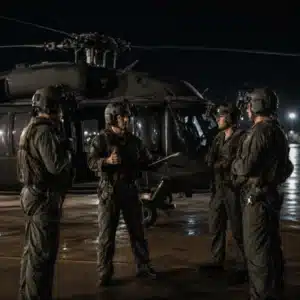
NVG online training should not be treated as a box to check. It should help crews make safer choices in real missions.
Crews benefit from a robust program:
- Understand the requirements of FAA regulations
- Identify NVG limitations prior to takeoff.
- When working at night, use clear callouts.
- Examine the cockpit lighting and goggles.
- Create safer landing zones and routes.
- Address any NVG or illumination concerns
Specialized aviation training can be useful in this situation. Training can be matched to the mission by the appropriate source. There are differences in the hazards faced by SAR teams, police pilots, and EMS personnel.
Good training also builds trust inside the cockpit. Pilots and crew members know what to say, what to watch, and when to speak up.
Does online NVG training meet FAA requirements?
Online training alone does not meet all FAA NVG requirements. It may support the ground-school part of a full program. Pilots still need logged flight training and the right instructor endorsement. The program should follow FAA rules and the operator’s approved training plan.
What does FAA-compliant night vision goggle online training include?
It usually covers NVG optics, FAA rules, human factors, night vision limits, and equipment care. It may also explain cockpit lighting and mission planning. These lessons help prepare pilots for simulator and flight training. The exact course should match the approved syllabus.
Is simulator training required by the FAA?
FAA §61.31(k) requires logged ground and flight training for NVG PIC use. It does not make simulator training a blanket rule for every pilot. Still, many programs use simulators to build skills before live flight. This can reduce risk and cost.
Who can give NVG endorsements?
An authorized instructor must give the required endorsements. For NVG training, the instructor must meet the rules in 14 CFR §61.195(k). This includes the right ratings, NVG PIC status, and logged NVG experience. Crews should check instructor credentials before booking.
How often do NVG pilots need recent experience?
FAA rules include recent NVG operating experience for PIC operations with passengers. Under 14 CFR §61.57(f), pilots must log set NVG tasks within the required two-calendar-month window. Operators may also require recurrent training. Many crews train each year to keep skills sharp.
Is NVG training only for pilots?
Pilot qualification rules apply to pilots. Still, crew members can benefit from NVG awareness training. Flight nurses, tactical officers, and rescue crews need to know NVG limits and callouts. Crew-wide training helps reduce confusion during night missions.
NVG training helps crews fly with more control, better awareness, and stronger safety habits. Online lessons can build the ground-school base, while live training completes the skill set.
Ready to start FAA-compliant night vision goggle online training? Contact Night Flight Concepts today to learn more about NVG online training, flight training, and specialty aviation training for working crews.