(888) 632-8764
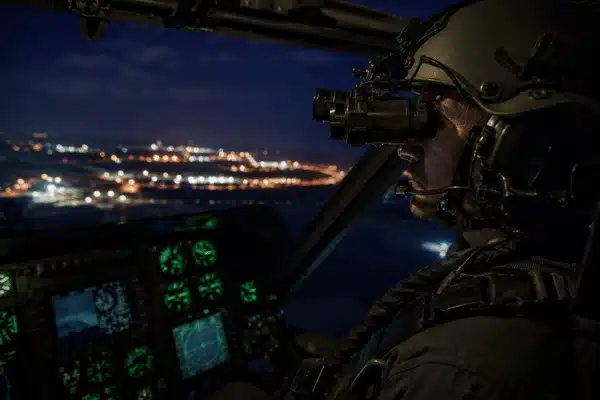
White phosphor night vision goggles have been a popular choice among aircraft personnel. In contrast to normal green-tinted optics, white phosphor night vision goggles display the night scene in greyscale. Many pilots find it easier to read, especially while scanning terrain, cables, and objects in low-light conditions.
But phosphor color is only one aspect of the picture. Aviation buyers must examine the entire system, including tube performance, cockpit lighting compatibility, FAA training requirements, and a solid maintenance program. The ideal white phosphor NVG is not simply the one with the finest image. It is the one that operates within a properly approved aviation environment.
Table of Contents
What Are White Phosphor Night Vision Goggles
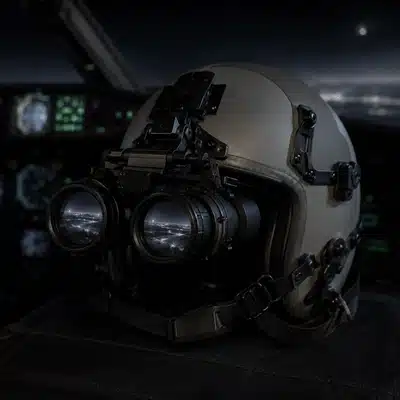
Gen 3 night vision white phosphor systems use a gallium arsenide (GaAs) photocathode to capture light. That light gets amplified through a microchannel plate (MCP) and then hits the phosphor screen. The phosphor screen determines the image color you see.
Green phosphor (P43) has been the standard for decades. White phosphor (P45) shifts the output to a grayscale image that many users describe as more natural-looking.
White phosphor results in a black and white image. This improves pilots’ ability to read shadow detail, contrast, and terrain contour. In a 2022 peer-reviewed study published in Ergonomics, there was no noticeable difference in objective visual performance between the two phosphor types. According to a 2024 study, even earlier users of green phosphor preferred it. The overall truth is that white phosphor offers a superior viewing experience for many consumers, but tube quality remains the deciding factor.
White Phosphor vs Green Phosphor for Aviation
Both phosphor types are available in FAA TSO-approved configurations. What matters more is how the system performs inside your specific cockpit and mission environment.
White Phosphor vs Green Phosphor
Performance Metrics That Matter
Do not buy on phosphor color or a single FOM number alone. Request full tube data and evaluate each metric:
- Resolution: The smallest detail the tube can detect. Important for wire and obstacle detection.
- SNR (signal-to-noise ratio): A higher SNR indicates a crisper image in low light.
- Gain: The amount by which the tube amplifies available light. Tube life must be balanced with brightness behavior.
- Halo: A glow around a bright source, such as runway lights. The lower halo makes nearby details visible.
- Blooming: Smearing generated by bright light sources. The dense blossoming obscures neighboring detail.
- FOM (Figure of Merit): usually resolution multiplied by SNR. Useful shorthand, but not a complete purchasing metric on its own.
How to Buy or Upgrade Aviation NVGs the Right Way

Night vision training and system certification must be part of any NVG purchase. Verify each of these before you buy:
- FAA TSO compliance: Has the system been authorized for your intended civil use case?
- NVIS cockpit compatibility: Have your aircraft’s lights been tested using FAA checklists?
- Full tube specifications include request resolution, SNR, gain, halo, and autogating data, not just FOM.
- The objective-lens filter determines the compatibility of HUD and color displays.
- Maintenance documentation: Part 135 activities necessitate maintenance controls such as D093/D094.
- Training requirements for Part 61 include ground and flight training, logbook endorsements, and recent night vision training and operating experience.
- Export controls: Gen 3 image intensifier tubes fall under U.S. Munitions List rules.
What is the main difference between white phosphor and green phosphor night vision goggles?
White phosphor displays the night scene in grayscale, which many users find more natural to interpret. Green phosphor uses a traditional green monochrome image that has been the aviation and military standard for decades.
Are white phosphor night vision goggles FAA-approved for aviation?
Yes. White phosphor (P45) NVGs are available in FAA TSO-approved configurations. Your aircraft must also be evaluated for NVIS cockpit lighting compatibility before operations begin.
Do I need special night vision training to use white phosphor NVGs?
Yes. FAA regulations under Part 61 require specific ground and flight night vision training, a logbook endorsement, and recent operating experience. This applies regardless of phosphor type.
Are white phosphor NVGs the same ones used by the US military?
Modern U.S. military systems like the ENVG-B use white phosphor tubes paired with thermal sensing. However, night vision goggles used by US military aviation programs vary by platform and remain certification-specific, not a universal white-phosphor mandate.
What performance specs should I request when buying white phosphor night vision goggles?
Ask for resolution, SNR, gain behavior, halo rating, blooming characteristics, and autogating specs. A single FOM number is not enough to make a fully informed purchase decision.
Can Gen 3 night vision white phosphor systems work with all cockpit lighting?
Not automatically. Cockpit lighting must be NVIS-compatible and evaluated using FAA standards. Some LED obstacle lights may not be visible through NVGs unless they are configured specifically for IR compatibility.
Night Flight Concepts is a specialized aviation night vision training company with extensive experience in Gen 3 NVIS operations, crew qualification and systems integration. Our instructors are FAA NVG endorsed and have operational experience on rotary and fixed wing platforms. We’ve supported operators across the U.S. with Part 61 and Part 135 NVG regulations, cockpit illumination studies and program standup from the ground up. Our methodology is based on FAA guidance, DoD standards and flying, not just in the classroom.
Ready to get your crew NVG-qualified or evaluate a white phosphor upgrade for your fleet? Book a consultation with Night Flight Concepts today. Our team will walk you through the right system, the right approval path, and the right training to fly safely at night.