(888) 632-8764

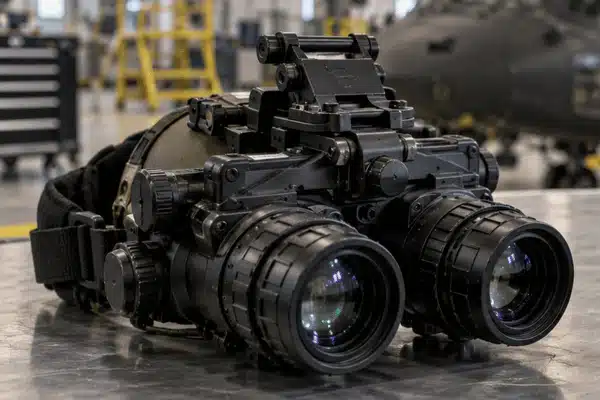
Inside every analog NVG is an image intensifier tube that turns faint ambient light into a usable image. FOM is helpful when comparing tubes, but it cannot tell the whole story. Aviation crews also need to look at SNR, resolution, tube wear, glare, and the NVIS setup they are approved to fly.
That last point carries real weight. Under U.S. rules, the night vision goggles used for NVG operations must be approved for use by the FAA as part of the aircraft’s equipment, no matter how well a tube scores on paper.
Night Flight Concepts works with aviation teams that use NVGs for EMS, law enforcement, SAR, firefighting, and other flight missions.
As an FAA Part 145 certified NVG repair station that has supported aviation operators since 2006, the team inspects, repairs, and upgrades aviation goggles such as the F4949 and M949, both recognized as AN/AVS-9.
Table of Contents
What Is an Image Intensifier Tube?
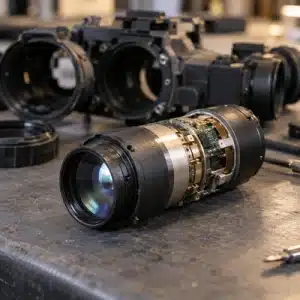
An image intensifier tube takes a small amount of available light and makes it bright enough to see.
New Zealand’s Civil Aviation Authority (CAA) describes the tube as four main parts working in sequence, with built-in circuitry that protects the tube from bright light sources and automatically adjusts gain as light levels change:
• Photocathode: Converts incoming light into electrons.
• Microchannel plate (MCP): Multiplies those electrons many times over.
• Phosphor screen: Turns the electrons back into a visible image.
• Fiber optic twist: Inverts the image so it appears upright to the viewer.
It sits inside the NVG behind the front lens. A Gen 3 image intensifier tube uses a gallium arsenide photocathode and is widely used in aviation NVGs, including AN/AVS-9 systems.
These terms are easy to mix up:
- Tube: The part that boosts available light.
- Goggle: The housing, lenses, controls, and image tubes.
- NVIS: The goggles, aircraft lighting, crew training, and approved operating setup.
The tube plays a big role in image quality. However, aviation crews still need the full NVIS to work together properly.
Cockpit lighting is a good example. A Class A NVG uses a 625 nm minus-blue objective lens filter, while a Class B NVG uses a 665 nm filter. NVIS lighting is designed around those filters, so a cockpit shown to be compatible only with Class B goggles carries a limitation to use only Class B NVGs.
What Does FOM Mean in Night Vision?
FOM stands for figure of merit.
It is calculated using two tube measurements:
FOM = signal-to-noise ratio × limiting resolution
Here is a simple example:
| Night Vision Tube | Signal-to-Noise Ratio (SNR) | Resolution (lp/mm) | Figure of Merit (FOM) |
| Tube A | 30 | 64 | 1,920 |
| Tube B | 27 | 72 | 1,944 |
The FOM values are close, but the tubes are not identical. Tube A has the stronger SNR, while Tube B resolves finer detail. Their scores are only 24 points apart, yet each tube leads in a different area.
Signal-to-noise ratio, or SNR, shows how clearly useful detail stands out from image noise. A stronger SNR can help the image look cleaner in dark conditions.
Resolution shows how much fine detail the tube can separate. It is usually measured in line pairs per millimeter, or lp/mm. One line pair is a dark line and a light line side by side, so 64 lp/mm means the tube can separate 64 of those pairs within a single millimeter.
This is why FOM night vision ratings only tell part of the story.
Two tubes can have almost the same FOM but perform differently in real use.
Other useful specs include:
- High-resolution
- Halo size
- Gain
- Image defects
- Tube matching between both eyes
- Low-light response
The phosphor type also changes how the image appears. Green P43 and white P45 are both used in night vision systems. Phosphor color itself is not part of the FOM formula.
According to NZ CAA guidance, black-and-white imagery is generally more natural to the human eye and can improve scene recognition. The same guidance flags that some manufacturers sell one NVG model in either green or white phosphor without changing the model name, so the rotorcraft flight manual supplement should state the phosphor type clearly.
What Is a Good FOM for Night Vision?
If you are asking what a good FOM for night vision is, there is no single number that every aviation crew should aim for.
FOM tells you how SNR and resolution work together. A strong score can be useful when comparing tubes, but it does not confirm that a tube belongs in an aviation NVG.
FAA TSO-C164a sets performance requirements for aviation night vision goggles. It does not give one FOM score that defines an approved aviation tube.
When comparing tubes for flight use, look beyond the headline number. Ask what the tube does well and where its limits are.
Pay attention to:
- SNR: How clean does the image stay when very little light is available?
- Resolution: Can you still make out useful detail?
- Halo: What happens around bright lights and other strong light sources?
- Tube condition: Are there spots, defects, or other signs of decline?
- Tube matching: Do the left and right channels give a similar image?
- Approval: Is that tube permitted in the NVG configuration you use?
The same rule applies when comparing ANVIS 9 tubes with tubes sold for tactical use.
A tactical tube can have impressive FOM numbers and still be the wrong choice for an aviation system.
When Should Aviation NVGs Be Upgraded?
An upgrade makes sense when testing shows a real performance issue or the current tubes no longer suit the mission.
A newer tube or a bigger FOM number, by itself, is not a reason to replace working equipment.
Start with the goggles you already have:
- Have them tested. Check resolution, gain, current draw, distortion, and overall tube condition.
- Think about where you fly. Dark rural areas, city lights, and landing zones can place different demands on NVGs.
- Pin down the problem. The issue could be noise, lost detail, glare, defects, or two tubes that no longer match well.
- Check what a replacement would improve. Compare the specs that relate to the problem you found.
- Verify the configuration. Before changing tubes, make sure the replacement is allowed for that NVG and NVIS setup.
Some defects call for action right away. NZ CAA training guidance lists shading, edge glow, and flashing, flickering, or intermittent operation as unacceptable defects. Bright spots, black spots, veiling glare, chicken wire, fixed pattern noise, image disparity, and output brightness variation are listed as acceptable faults. Even so, some cosmetic blemishes can worsen over time, so their size and position should be recorded and tracked at each inspection.
Night Flight Concepts includes measurements such as resolution, gain, image distortion, and current draw during NVG testing. Results from each inspection are logged in a database, which allows trend analysis across inspections to flag goggles that are aging or losing performance over time.
Some Gen 3 tubes are rated for around 10,000 hours of use. Night Flight Concepts also lists a 10,000-hour active life for its Gen 3 Pinnacle tubes.
That number is useful for planning, but it is not an automatic replacement deadline.
If your current tubes are showing weaker performance, review the available Gen 3 aviation NVG upgrades.
Can You Install Any Higher-FOM Image Intensifier Tube?
No.
A tube may fit the goggle and still be wrong for aviation use.
The FAA makes an important distinction here. A Technical Standard Order authorization does not, by itself, approve equipment for installation in a specific aircraft.
Under 14 CFR 91.205(h), NVGs and the required aircraft lighting must be functional and FAA-approved for NVG operations.
Pilot qualifications still matter too.
14 CFR 61.31(k) covers NVG ground and flight training requirements. 14 CFR 61.57(f) covers recent experience for certain NVG operations.
Other aviation authorities follow similar rules.
New Zealand’s Civil Aviation Authority updated its NVIS guidance in April 2026. That guidance states that tubes marked “not for aviation use” must not be used for NVG operations.
A higher FOM does not override those requirements.
What is a good FOM for night vision?
There is no single FOM number that works for every aviation crew. FOM combines SNR and limiting resolution, so a higher score can point to stronger tube performance. You still need to look at tube condition, halo, defects, approval, and how the tube performs in your normal flight environment.
Is higher FOM always better?
Not always. A higher FOM means the tube has a stronger mix of SNR and resolution. It does not tell you everything about glare, wear, image defects, tube matching, or whether the tube is approved for your aviation setup.
How long does a Gen 3 image intensifier tube last?
Some Gen 3 tubes are rated near 10,000 hours. Night Flight Concepts lists a 10,000-hour active life for its Gen 3 Pinnacle tubes. Actual service life can vary, so crews should rely on inspections, test results, and approved maintenance requirements.
Is white phosphor better than green phosphor?
White and green phosphors give the image a different look. Some users prefer white phosphor because they find the image easier to view. However, phosphor color is not part of the FOM calculation, and the right choice still needs to fit the approved aviation configuration.
Can I install tactical tubes in aviation NVGs?
Do not assume a tactical tube is safe for aviation just because it fits. Aviation tubes must match the approved NVG configuration and maintenance data. Some aviation authorities also reject tubes marked “not for aviation use.”
How often should aviation NVGs be inspected?
There is no inspection schedule that applies to every NVG in every operation. The correct interval comes from the manufacturer and the maintenance program used for that equipment. New Zealand’s 2026 NVIS guidance, for example, calls for a 180-day NVG appliance inspection or the interval set by the NVG manufacturer. U.S. operators should use the FAA-approved maintenance data that applies to their system.
FOM can help you compare one image intensifier tube with another, but it should not make the final call. What matters is how the tubes test, how they perform on your missions, and whether they fit the approved NVIS configuration. If your ANVIS 9 tubes are starting to fall short, learn more about Gen 3 NVG upgrades from Night Flight Concepts and request an inspection or upgrade review.